
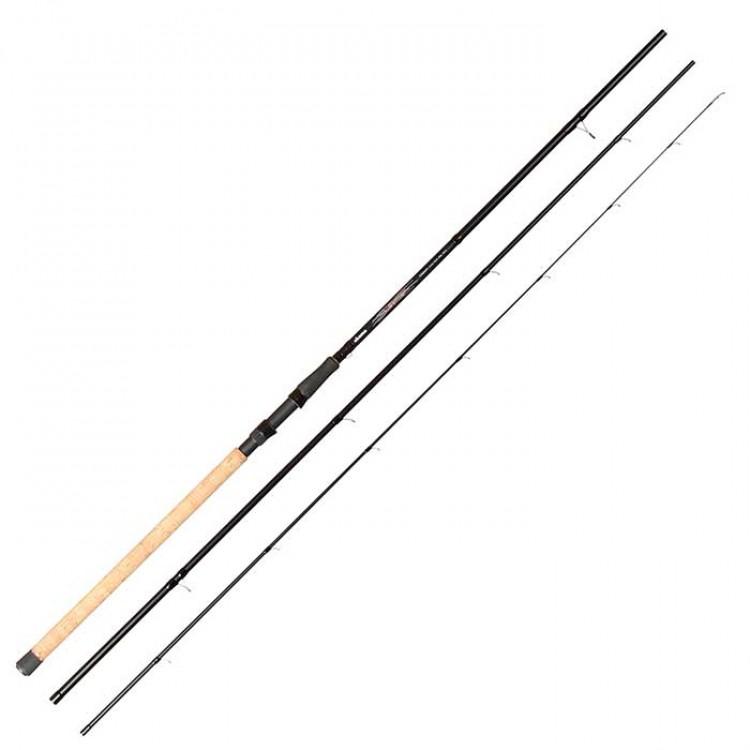
Description
Clive Branson’s Fishing Tackle Recommendations – Carbon Fibre Fishing Rods
Throughout my international match fishing career, I’ve witnessed enormous changes in fishing tackle.
When I first started fishing, many rods were manufactured from materials such as split cane and fibreglass.
The arrival of carbon fibre revolutionised rod design, allowing manufacturers to produce lighter, slimmer and more responsive fishing rods.
For competitive anglers, particularly those fishing long matches with lightweight tackle, these developments made a tremendous difference.
However, choosing the right carbon fibre rod still depends on understanding the type of fishing you intend to do.
What is a carbon fibre fishing rod?
Carbon fibre rods are manufactured using carbon fibres combined with resin to create a lightweight but strong rod blank.
Different materials, construction methods and designs produce rods with different actions and characteristics.
Some carbon fibre rods are designed for delicate float fishing, while others are built to handle heavier feeders and larger fish.
The important thing is choosing a rod that’s suitable for your particular fishing method.
Carbon fibre rods for float fishing
Float fishing has always been one of my favourite methods, particularly when fishing rivers with stick floats and wagglers.
For this style of fishing, I prefer a rod that’s lightweight, well-balanced and responsive.
A good float rod should allow you to cast accurately, control the line and play fish safely when using relatively light tackle.
The action of the rod is particularly important when fishing with small hooks and fine hooklengths.
A rod that’s too stiff can make it more difficult to cushion the sudden movements of a hooked fish.
Choosing a carbon fibre feeder rod
Feeder fishing places different demands on a rod.
A feeder rod must be capable of casting the intended weight while providing sufficient sensitivity to detect bites.
Many feeder rods are supplied with interchangeable quiver tips of different strengths.
These allow anglers to adapt their tackle to different conditions.
When choosing a feeder rod, consider the casting weight, distance and type of water you’ll be fishing.
There’s little point purchasing an extremely powerful feeder rod if most of your fishing involves small feeders at short distances.
Understanding rod action
One of the most important features of any fishing rod is its action.
Some rods bend mainly towards the tip, while others have a more progressive action that allows the bend to extend further down the blank.
Different actions suit different fishing methods.
For delicate float fishing, a progressive action can be particularly useful when playing fish on light hooklengths.
For certain feeder fishing situations, a rod with greater casting power may be necessary.
My advice is to choose a rod for its intended purpose rather than simply assuming that a stiffer or more expensive rod must be better.
The importance of rod balance
A lightweight rod isn’t necessarily a well-balanced rod.
The position of the reel, handle design and distribution of weight along the blank all influence how comfortable a rod feels.
This is particularly important when float fishing, where the rod may be held for long periods.
A well-balanced rod can help reduce fatigue and make casting and line control more comfortable.
Choosing the correct rod length
Carbon fibre fishing rods are available in many different lengths.
For general float fishing, rods around 12 to 13 feet are popular choices, although shorter or longer rods may be better suited to particular venues and methods.
Longer rods can offer advantages when controlling a float on a river, while shorter rods may be more convenient in confined spaces.
Feeder rod lengths should also be selected according to the casting distance, venue and fishing conditions.
Are expensive carbon fibre rods worth the money?
Modern carbon fibre rods are available at a wide range of prices.
The more expensive models may offer refinements in weight, balance, materials and construction.
However, that doesn’t mean every angler needs to spend a fortune.
There are many reasonably priced carbon fibre rods capable of providing excellent performance for general pleasure fishing.
I would always recommend choosing a rod that suits your requirements and budget rather than buying something simply because it carries a famous name.
Looking after carbon fibre rods
Although carbon fibre rods can be remarkably strong in normal use, they can also be damaged by knocks, crushing or misuse.
Always transport your rods in suitable protective cases or holdalls.
Check the rod rings regularly for damage, particularly if you notice unusual wear on your fishing line.
Keep the joints clean and avoid forcing sections together.
Never use a carbon fibre rod near overhead power lines. Carbon fibre conducts electricity, and contact or dangerous proximity can cause fatal electric shock.
My advice
Over more than six decades of fishing, I’ve learned that the most important thing about any rod is how well it performs for the method you’re using.
A good carbon fibre rod should feel comfortable, balance properly with your reel and provide the action required for your chosen fishing style.
Whether you’re a beginner purchasing your first float rod or an experienced angler looking for a specialist feeder rod, there’s no need to spend more than your budget allows.
Remember, successful fishing depends on understanding your tackle, reading the water and presenting your bait correctly.
It’s the angler who catches the fish, not the price of the tackle!
As an Amazon Associate, I earn from qualifying purchases.
Reviews
There are no reviews yet.