
Description
Clive Branson’s Fishing Tackle Recommendations – Fishing Lures
Throughout my fishing career, I’ve always believed that understanding fish behaviour is far more important than simply owning expensive tackle.
Although much of my competitive fishing has involved traditional coarse fishing methods, artificial lures provide another fascinating approach to catching predatory species.
Lure fishing is an active method that involves searching the water, locating fish and experimenting with different presentations until you discover what works.
Understanding artificial fishing lures
Artificial lures are designed to imitate prey or trigger a predatory fish’s natural feeding and hunting instincts.
They come in many shapes, sizes and colours, each producing a different movement through the water.
Some imitate small fish, while others create flashes, vibrations or disturbances that attract attention.
The secret is choosing a lure that suits the conditions and the species you’re targeting.
Spinners and spoons
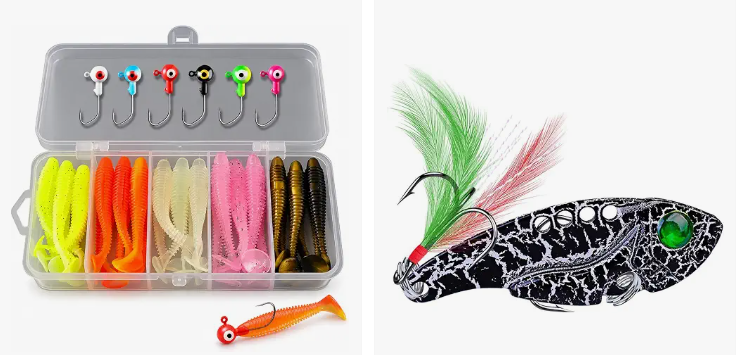
Spinners and spoons are among the most traditional artificial fishing lures.
Spinners generally use a rotating blade to create flash and vibration, while spoons wobble or flutter through the water.
Both can be effective for predatory fish, particularly when fish are actively hunting.
For someone starting lure fishing, a small selection of suitable spinners and spoons can be a sensible introduction.
Soft plastic fishing lures
Soft plastic lures have become extremely popular with modern predator anglers.
They include imitation fish, worms, grubs and other shapes designed to produce lifelike movements underwater.
Many are fished using jig heads or other suitable rigs.
One advantage of soft plastics is that they can be worked at different speeds and depths, allowing the angler to experiment with presentation.
Small soft plastics can be particularly interesting when targeting perch.
Hard-bodied lures and crankbaits
Hard-bodied lures include floating, sinking and diving designs.
Some are fitted with diving lips that make them swim below the surface when retrieved.
Different designs can be used to search various depths and areas of a lake, canal or river.
When choosing these lures, pay attention to their intended diving depth and the strength of the tackle required.
Choosing the correct lure size
One of the most important considerations is matching the lure to the fish you’re hoping to catch.
Small lures can be effective for perch and other smaller predators, while larger lures are commonly used when targeting pike.
However, larger fish don’t always take larger lures.
Water clarity, temperature, available prey and the feeding behaviour of the fish can all influence which size works best.
Lure colours and water conditions
There are countless lure colours available, from realistic silver and natural fish patterns to bright fluorescent designs.
In clear water, natural colours can be a sensible starting point.
In coloured water or poor light, brighter colours or lures producing stronger vibrations may help fish locate them.
There are no guarantees, so experimenting with different presentations is often worthwhile.
Using suitable rods and reels
Lure fishing generally involves repeated casting and retrieving, so a comfortable, well-balanced outfit is important.
Choose a rod with a casting weight suitable for the lures you’re using and a reel that operates smoothly.
The correct line and leader are equally important.
When targeting pike, always use an appropriate bite-resistant trace or leader, together with tackle strong enough to land the fish safely.
Fish welfare and responsible lure fishing
Fish welfare should always be a priority.
Artificial lures are often fitted with multiple hooks, so anglers should carry suitable unhooking tools and know how to use them.
Long-nosed forceps or pliers, suitable cutters and appropriate landing equipment are particularly important when targeting larger predators.
Consider using barbless hooks or carefully crushed barbs where appropriate, and avoid unnecessary handling.
Always follow local fishery rules and any applicable seasonal restrictions.
My advice
For beginners, I would recommend starting with a modest selection of artificial lures rather than buying a large collection.
Choose a few different styles, sizes and colours suitable for the fish you’re targeting.
Learn how each lure behaves in the water and experiment with retrieval speeds and depths.
Remember, a simple lure presented correctly in the right place can often be more successful than an expensive lure used badly.
As an Amazon Associate, I earn from qualifying purchases.

Reviews
There are no reviews yet.