
Description
Clive Branson’s Fishing Tackle Recommendations – Portable Fish Finders
Throughout my international match fishing career, I’ve always believed that successful fishing begins with understanding the water.
Long before electronic fish finders became widely available, anglers relied on plumbing the depth, observing water movement, studying underwater features and developing a feel for where fish were likely to feed.
Those traditional skills remain just as valuable today.
However, modern portable fish finders can provide additional information that helps anglers build a better picture of what’s happening beneath the surface.
What is a portable fish finder?
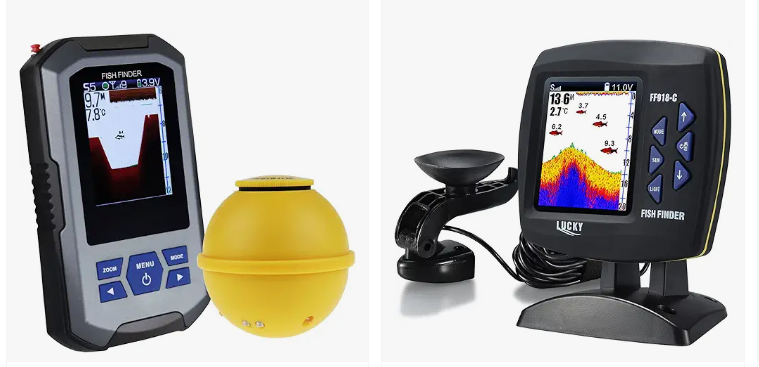
A portable fish finder uses sonar technology to send sound pulses through the water and interpret the returning echoes.
Depending on the model, it can display information about water depth, underwater contours, bottom structure and possible fish targets.
Some devices use a separate handheld display, while others connect wirelessly to a smartphone or tablet.
The advantage of portable equipment is that it can often be used at different venues without requiring a permanently installed system.
Wireless and castable fish finders
One of the most interesting developments has been the introduction of castable sonar devices.
These compact units can be attached to suitable fishing tackle and cast into the water, transmitting information to a compatible smartphone.
They can be particularly useful for investigating depths and underwater features from the bank.
However, it’s important to check the manufacturer’s recommended casting equipment, connection method and operating range.
Not every wireless fish finder is suitable for every fishing situation.
Understanding water depth
One of the most valuable features of a fish finder is its ability to provide information about depth.
Changes in depth can influence where fish travel, rest and feed.
Underwater shelves, deeper channels and sudden drop-offs can all be worth investigating.
Of course, traditional depth-plumbing methods remain extremely useful, especially when precise bait presentation is important.
Identifying underwater features
Some portable fish finders can help reveal variations in bottom structure and underwater contours.
Depending on the sophistication of the equipment, anglers may be able to identify features such as drop-offs, submerged obstacles and changes in bottom hardness.
These can provide clues about potential fish-holding areas.
However, sonar images require interpretation, and not every mark on the screen represents a fish.
Can fish finders actually locate fish?
Fish finders can detect sonar returns that may indicate fish, but they cannot guarantee that fish are present or feeding.
A device may display fish-like targets without identifying the species, while smaller fish or fish close to the bottom may be difficult to distinguish.
I would never recommend relying entirely on a fish finder to decide where to fish.
Observing the water, understanding the season and considering natural food sources are still essential.
Battery life and portability
When choosing a portable fish finder, consider how long the battery will last.
Some devices have rechargeable batteries, while others use replaceable batteries.
For anglers spending long periods beside the water, battery performance can be an important consideration.
Also check whether the equipment is genuinely portable and whether it requires additional accessories.
Smartphone compatibility
Many modern wireless fish finders connect to a smartphone through a dedicated application.
Before purchasing, make sure the device is compatible with your phone and operating system.
Check the advertised connection range, battery requirements and whether the application needs an internet connection for particular features.
Remember that wireless connection range can vary according to conditions.
Fishery rules and responsible use
Not every fishery permits electronic fish-finding equipment.
Some competitions and venues restrict or prohibit sonar devices, particularly during official practice or competition periods.
Always check the relevant fishery and competition rules before using one.
Castable units should also be secured correctly to minimise the risk of losing equipment in the water.
My advice
Portable fish finders can be useful tools, particularly for anglers exploring unfamiliar waters or trying to understand underwater contours.
However, I would encourage every angler to develop traditional watercraft skills alongside modern technology.
Learning to plumb the depth, read the water and understand fish behaviour will always be valuable.
A fish finder may show you what’s beneath the surface, but knowing what to do with that information is what makes a good angler.
As an Amazon Associate, I earn from qualifying purchases.
Reviews
There are no reviews yet.